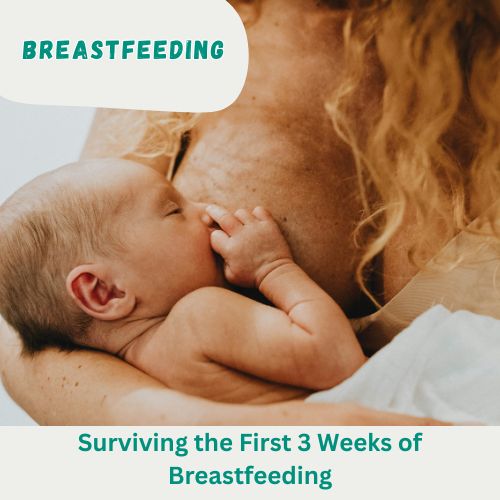
Introduction
Are you feeling anxious about breastfeeding your newborn? Don’t panic! In this article, we explain what happens over the first 3 weeks of breastfeeding and recommend ways to establish milk supply and establish milk supply effectively.

What happens in the first 3 weeks of breastfeeding a newborn?
During these crucial days, it’s vital to establish milk supply by ensuring frequent feeding sessions.
Let’s start at the beginning. Within the first hour of life, your newborn will need colostrum (liquid gold), which is a thick, yellowish, nutrient-dense fluid that is loaded with antibodies, proteins and white blood cells.
You might not realise this, but your body starts producing colostrum as early as 16 weeks into pregnancy, until a few days after birth.
Over the first few days, especially, you may be surprised at how much bigger and heavier your breasts will get, and sensitive nipples and milk leaks will be common.
Your newborn will feed every 1 to 3 hours and nurse for 10 – 45 minutes at a time. Between days 7 and 10, you can expect your baby to start feeding more frequently and for longer periods, especially at night.
Your baby will steadily be gaining weight, and your baby’s stools will change to loose, yellow stools. If your baby is nursing well, you should see 3+ soiled diapers a day and more than 6 wet diapers daily.
After the first 3 weeks, you will probably feel exhausted and overwhelmed because newborns wake for feeds every 2-3 hours, even at night.
At night, you can expect to be awake at 11 PM, 2 AM and 4 AM, which can feel extremely disruptive – but it gets easier.
The first 3 weeks are a shock to your system. You are still recovering, your newborn can’t tell the difference between day and night, and you are trying to figure out how to breastfeed – all while trying to remember to eat and take care of yourself.
Just try to be kind and patient with yourself (and your baby) and remember it will get easier.
Why is it important for my newborn to latch properly when breastfeeding?
In breastfeeding, “latching” describes how your baby’s mouth fits around your nipple and areola. Most of your areola will be covered if your baby is latching well, but a shallow latch will usually hurt your nipples and feel uncomfortable.
A deep latch is important when breastfeeding your baby because it allows your baby to remove enough milk from your breast to feel full and gain weight, and emptying your breasts fully increases milk production.
There is no “perfect” latch, but breastfeeding should feel comfortable after a few days, and your nipples should not be severely cracked or torn.
Which hormones help you establish your milk supply?
First, let’s look at the hormones that play a role in establishing your breastmilk supply. The two main hormones that affect breastfeeding are oxytocin and prolactin.
Oxytocin is commonly known as the “love hormone” and is responsible for milk-ejection and let-down. It also reduces cortisol levels in the body and signals uterine contractions, which speed up post-partum recovery.
On the other hand, prolactin is the hormone that increases your milk production, and it is secreted by the pituitary gland in response to your baby’s nursing. Prolactin levels rise while you feed your baby, which makes milk available for the next feed.
It is also important to know that high levels of estrogen and progesterone post-partum will block prolactin from producing milk, so it might be a good idea to get bloodwork done if you want peace of mind.
Will my milk production drop if I am stressed?
Absolutely, that is why it is so important to manage your stress because cortisol directly interferes with milk production.
But we understand how difficult it is – there is always something to stress about – especially in the first 3 weeks of having a newborn and adjusting to all the big changes.
Here’s the thing: cortisol (stress hormone) not only blocks the release of prolactin and oxytocin, but it also restricts blood flow to the mammary glands.
As a result, high stress levels directly inhibit milk production, limit your body’s ability to deliver nutrients to your breasts, and cortisol can pass through your milk and make your infant fussier.
How does sleep deprivation affect milk production?
Your body responds to sleep deprivation the same way it responds to stress – by releasing cortisol, which we now know, is directly responsible for inhibiting milk production.
To make matters worse, fatigue will also cause higher levels of inflammation in your body and degrade the quality of your milk by negatively affecting the proteins in your breastmilk.
We know it’s not as simple as “just sleeping more”, so to combat the effects of sleep deprivation on your breastmilk production, you can:
- Pump or nurse at least 8 times a day
- Breastfeed between 1 AM and 5 AM
- Try power pumping in early evenings
- Have more skin time with your baby
- Move your baby closer to your bed for night feeds
- Sleep when your baby sleeps
If you are a busy mom with a long to-do list, it’s tempting to try and catch up on everything you wanted to do all week, in one hour, but the truth is, it’s just not worth it.
Not only that but sleep deprivation impairs your brain’s ability to regulate emotions and you become hyper-reactive to any stimuli, especially crying babies.
When you are sleep-deprived, your stress threshold lowers, your pre-frontal cortex (responsible for rational thinking) “switches off” and your amygdala becomes more active, putting you in “fight or flight” mode all day.
What that means, is you will most likely respond to negative stimuli and stressful situations with anger, frustration, irritability and hostility – so please try get as much sleep as possible.
Set priorities that make sense as a tired, breastfeeding mom with a newborn. There will be time to do everything later – it’s okay to slow down!
How does breast milk supply and demand work?
The first 3 weeks of feeding on demand are the most important for establishing a good supply of breastmilk.
Newborns typically feed 8-12 times a day and you should feed your baby on demand to keep your supply steady.
When your breasts are not emptied fully, either by your baby or by pumping, your body receives signals to produce less milk and your production drops, often very quickly.
On the other hand, if you breastfeed frequently, empty your breasts completely, pump at least once a night and have power-pumping sessions, your body will consistently produce more milk to keep up with demand.
Full, heavy breasts are either a signal that you are ready to feed your baby, or that you need to empty your breasts. You will notice how much softer and lighter your breasts feel once they are empty.
If your breasts are not emptied fully, they will feel engorged, heavy and uncomfortable, which could lead to mastitis.
What is mastitis?
Mastitis is caused by clogged milk ducts or bacteria entering the milk ducts through damaged skin on the nipples, which may cause infection, breast pain and flu-like symptoms.
If your breasts feel unusually warm and look red or swollen, you should seek medical attention as soon as possible.
How to pump when breastfeeding?
Put simply, the more frequently you empty your breasts, the more milk your body will produce. You should pump every 2-3 hours if your baby is with you, or 3-4 hours if you are not with your baby.
You can pump after every feed to completely empty your breasts and boost your supply or alternate between breasts.
What are the different types of breast pumps?
There are 3 main types of breast pumps:
Manual Pumps (hand pumps)
Pros and Cons of Manual Breast Pumps:
| 👍Pros | 👎Cons |
| Lightweight | Not suitable for daily use |
| Inexpensive | Suction is much weaker than electric pumps |
| Small and quiet |
Our Top Picks for Manual Breast Pumps:
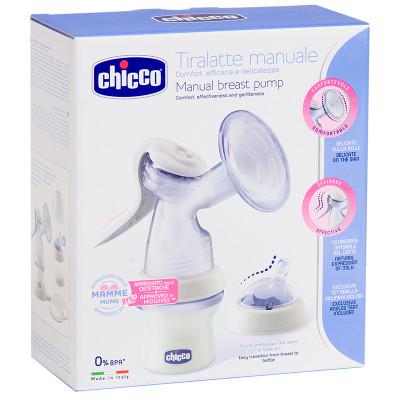
(R899.00)
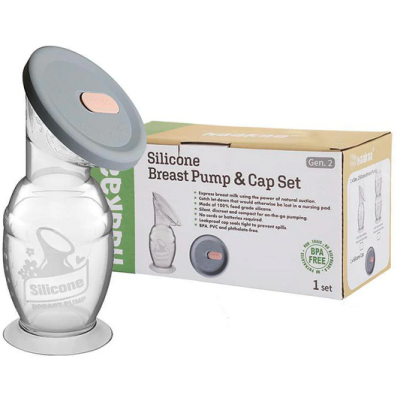
(R419.00)
Electric Pumps (sing/double)
Pros and Cons of Electric Breast Pumps:
| 👍Pros | 👎Cons |
| Strong suction power | Expensive |
| Customizable settings | Louder than manual pumps |
| Most are battery-operated | Takes longer to clean |
Our Top Picks for Electric Breast Pumps:
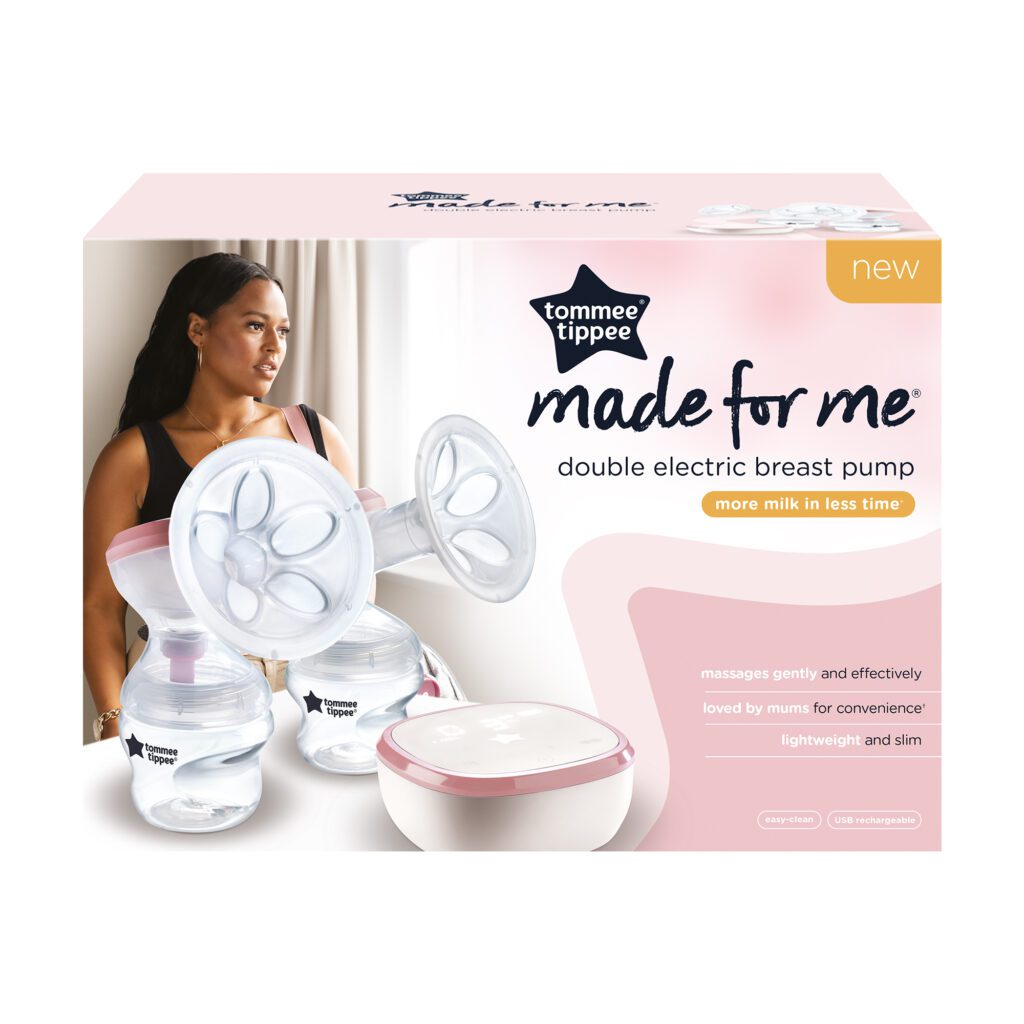
(R3,549.99)

(R7,499.90)

(R2,999.00)
For your convenience, we recommend using a pumping bra with your electric pump.
Wearable Pumps (hands-free)
Pros and Cons of Wearable Breastpumps:
| 👍Pros | 👎Cons |
| Mobility to move around while pumping | Usually very expensive |
| Discreet | Weaker suction than normal pumps |
| Convenient with less parts | Shorter battery life |
| Lightweight |
Our Top Picks for Wearable Breast Pumps:
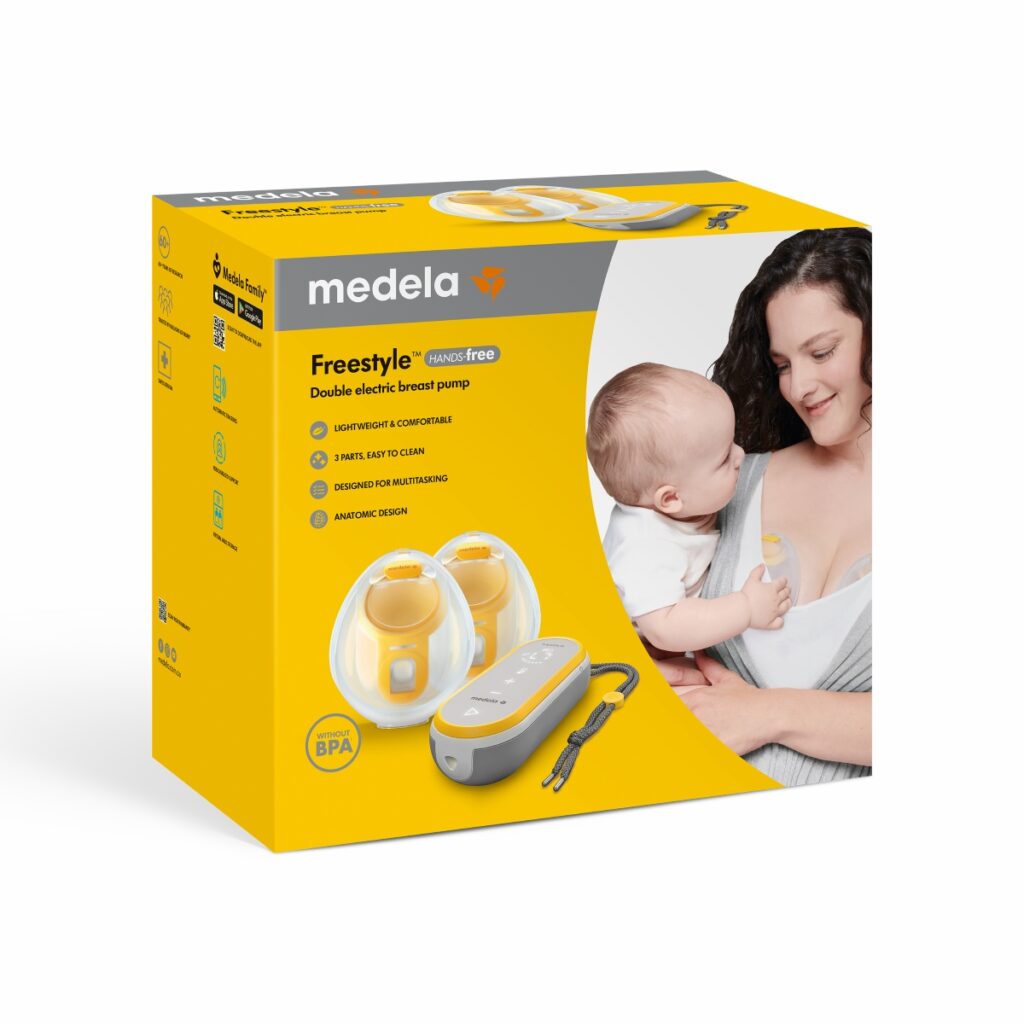
(R14,499.99)

(R3,590.00)
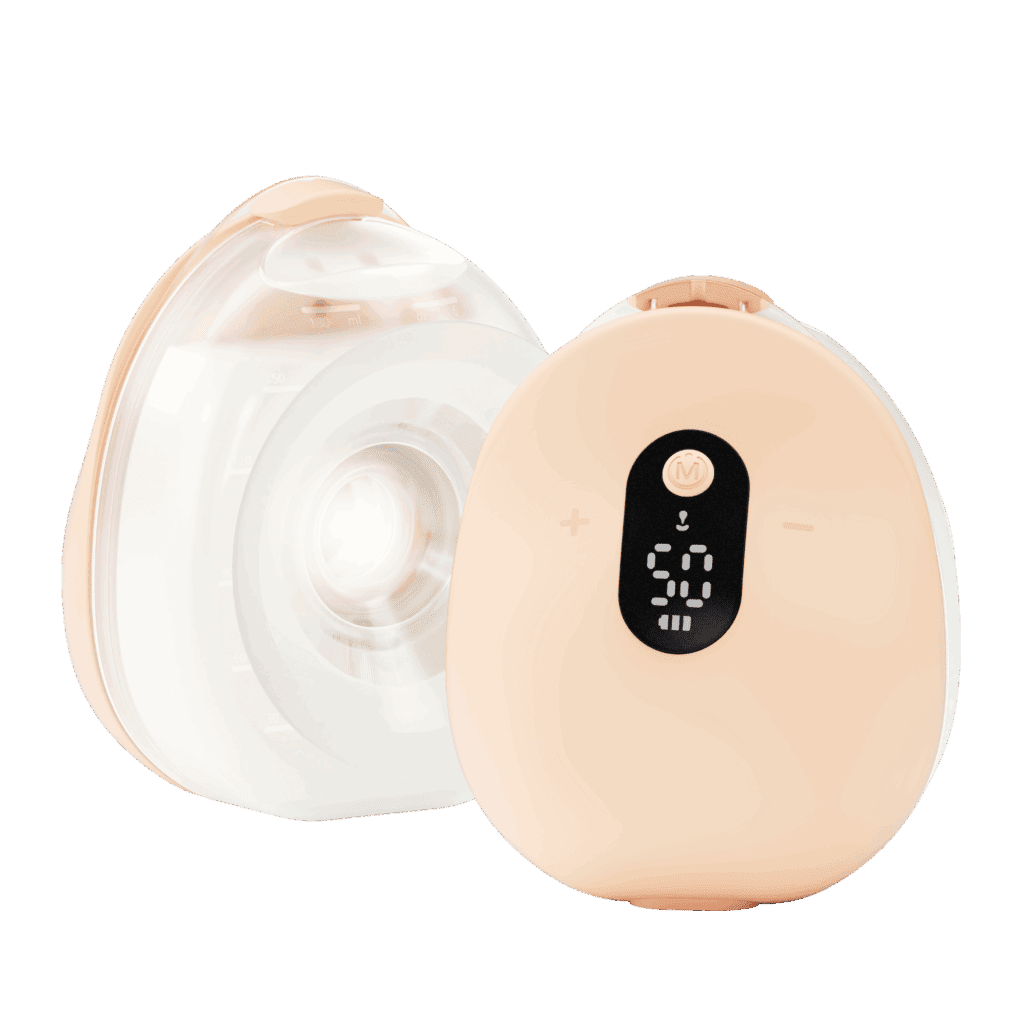
(R2,199.00)
Milk-catchers:
A great way to prevent wastage is by wearing milk catchers inside your bra. By using milk catchers, you can go about your day without wasting a single drop of milk – simply collect and store.
Milk catchers do not work the same way pumps do, but they are relatively inexpensive and easy to use. You can grab a pair of milk catchers from Takealot for less than R300.
Here’s an example of a pumping schedule for the first 3 weeks:
Whether you are exclusively pumping or pumping as well as breastfeeding, it is important to follow a schedule as a guideline, but try to remain flexible.
Sample Pumping Schedule: First 3 Weeks Postpartum (With 2 Daily Power Pump Sessions)
| Week | Total Sessions per 24 Hours | Example Schedule | Session Length | Notes |
| Week 1 | 8–10 sessions | 6am (Power Pump), 9am, 12pm, 3pm, 6pm (Power Pump), 9pm, 12am, 3am | Regular: 15–20 mins Power Pump: 60 mins total | Pump every 2–3 hrs during the day, every 3–4 hrs overnight. Focus on stimulation, not volume. |
| Week 2 | 8–10 sessions | 6am (Power Pump), 9am, 12pm, 3pm, 6pm (Power Pump), 9pm, 1am | Regular: 15–20 mins Power Pump: 60 mins total | Avoid going longer than 4 hrs without milk removal. Supply is regulating. |
| Week 3 | 8+ sessions | 6am (Power Pump), 9am, 12pm, 3pm, 6pm (Power Pump), 9pm, 2am | Regular: 15–25 mins Power Pump: 60 mins total | Continue strong daytime frequency. Maintain at least one overnight pump. |
We know how hard the first 3 weeks are, so aim for at least one power pump session a day to boost your milk production if twice a day feels too overwhelming right now.
Cluster feeding during the first 3 weeks with a newborn
Why is my newborn suddenly feeding more?
When your baby cluster feeds, it’s a great time to establish milk supply.
By the 7th day, you might notice your baby seems hungry all the time and wants to feed more frequently. This is a period of cluster feeding and it will happen every couple of days or weeks as your baby grows.
Many moms find cluster feeding exhausting, especially if it happens at night, but this is a wonderful opportunity to boost your milk production – so try to push through.
Why do newborns cluster feed?
One of the main reasons newborns cluster feed is when they are having growth spurts and need more calories, but they will also cluster feed for comfort and before sleeping at night.
Babies usually have growth spurts at 3 weeks, 6 weeks, 3 months, 6 months and 9 months. They will be hungrier than usual, more irritable, clingier and may have disrupted sleep cycles.
Cluster feeds tend to last for a few days at a time. Despite how exhausting it may feel, feeding on demand at these times will absolutely boost your milk production, which is good for you and your baby.
Use every opportunity to establish milk supply when you can.
How to cope with cluster feeds
Some mothers find cluster feeding extremely overwhelming because everything is harder to deal with when you are sleep deprived and your baby’s behaviour becomes unpredictable.
Here are some practical ways to cope with cluster feeds:
- Prepare a nursing station that is comfortable and stocked with snacks and water
- Feed on-demand and follow your baby’s hunger cues
- Get into a habit of baby-wearing
- Get plenty of skin time with your baby
- Get yourself a large water bottle and always keep it full and close-by
- Keep easy, healthy nutrient-dense snacks nearby
- Explore with different breastfeeding positions
- Reduce stimulus and dim the lights
- Play soft music or watch something relaxing
- Try to get help with cleaning and cooking, and/or babysitting if you have other children
- Most importantly, be patient and remember to breathe and slow down if you feel overwhelmed
How do night feeds help establish milk supply when breastfeeding?
It’s interesting to note that prolactin (the milk production hormone) peaks between 1 AM and 6 AM, and milk produced at night is higher in fat and protein, which helps your baby grow well.
In general, prolactin levels increase significantly at night, making night pumps/feeds the best time for power pumping and increasing milk production.
What is power pumping and how to do it when breastfeeding?
Power pumping mimics cluster feeding and it is a popular pumping technique used by moms who breastfeed to boost milk production.
Each power pumping sessions will last for 60 minutes, and you can do it twice a day for the best results.
The best time to power pump is early in the morning between 5 AM and 6 AM when prolactin levels peak, or in the evening when your baby sleeps for longer.
Start by pumping for 20 minutes, followed by 10 minutes of rest and 10 minutes of pumping for the remaining 40 minutes.
When you rest, massage your breasts for 10 minutes before pumping again to maximise output and make sure you fully empty your breasts.
Make sure to drink plenty of water before and after power pumping, as it will drain a lot of fluid from your body.
How to Establish Your Milk Supply in the First 3 Weeks
✅Feed Frequently (8–12 Times in 24 Hours)
During this time, your body is learning how much milk your baby needs. That is why you should feed on demand and feed your baby frequently.
✅Don’t Watch the Clock — Watch your Baby
It may seem like a good idea to set alarms and follow a strict schedule, but your baby’s hunger cues are the most reliable way to know when it’s time to breastfeed.
✅Prioritise Night Feeds
Prolactin levels spike at night and peak between 1 AM and 6 AM, so use these feeding sessions as an opportunity to boost milk production in the early days.
✅Ensure a Deep Latch
A deep latch will ensure that your baby is emptying your breasts, which will also increase your milk production.
✅Use Skin-to-Skin Contact Daily
Cortisol (stress hormones) directly inhibits your milk production, so use skin time to bond with your baby, relax and release those feel-good hormones that boost your milk supply.
✅Avoid Unnecessary Formula Supplementing
Your baby’s stomach is the size of a walnut, so avoid “topping-up” with formula, especially during cluster feeding periods.
✅Consider Pumping
Whether your baby isn’t latching well or you want to boost your milk production and have milk stored up for just in case, pumping is a great way to support you on your breastfeeding journey.
✅Eat, Hydrate and Rest (As Much As Possible)
How much you sleep, eat and drink will directly impact your ability to produce milk, so get as much rest as you possibly can and don’t skip any meals.
How much milk does my newborn need in the first 3 weeks of breastfeeding?
A newborn’s stomach is the size of a marble or walnut, so they only require small, frequent feeds instead of being fed in large volumes.
How much milk does a newborn need in the first 3 weeks?
To make this simple, let’s explain how much milk newborns need by looking at the numbers:
- 15-30 ml per feed for the first 3 days
- 30-60 ml per feed for the following 3 days
- 60-90 ml per feed for the following 2 weeks
Your newborn will feed 8-12 times a day, so be sure to check for hunger cues (don’t watch the clock) and breastfeed on demand.
6 signs your baby is nursing well:
The following signs are an indication that your baby is getting enough milk:
- Your baby has a deep latch
- You can hear your baby swallowing
- Your baby is gaining weight steadily
- Your breasts feel empty and lighter after feeds
- Your baby produces 6+ wet nappies daily
4 signs your baby is not getting enough milk:
If you notice any of the following, it might be a sign that your baby is not getting enough milk:
- Fewer wet diapers
- Poor weight gain
- Persistent painful latch
- Signs of dehydration
- Refusing to latch
Why has my milk supply dropped?
These are 4 common mistakes that most new moms make when breastfeeding:
- Missing baby’s hunger cues and sticking to strict feeding schedules
- Skipping night feeds
- Overusing pacifiers in the first 3 months
- Not sleeping enough, which causes stress and fatigue
- Not emptying breasts fully
- Formula “top-ups”
When Should I See a Lactation Consultant?
A lactation consultant is a certified healthcare professional that specializes in breastfeeding and can help with latching, boosting milk supply and trying different breastfeeding positions.
If breastfeeding is painful, your nipples are sore and cracked, or your breasts feel clogged and engorged, a lactation consultant will be able to help you find relief.
Lactation consultants also give advice on pumping, milk storage and weaning your baby off breastfeeding.
Most lactation consultants are very patient and understanding and will always try to help you with any breastfeeding-related challenges you might be facing.
Conclusion
The first 3 weeks of breastfeeding can often feel very overwhelming because you no longer get the same amount of sleep at night and breastfeeding has an unexpected learning curve for first-time moms.
Babies grow fast and need to nurse frequently, especially when they have growth spurts. Cluster feeding can also feel overwhelming, especially if you are not physically and mentally prepared for the sudden change in feeding habits and routine.
For some moms, reprioritising their lives and adjusting their routines might be the most difficult part, but try to be flexible and let go of the pressure to get everything done in one day – rest is more important and sleep debt is a very really thing.
In conclusion, remember that frequent feeds and fully emptying your breasts are essential to establish milk supply.
We hope this article helps you understand how the body produces milk and has given you some confidence in your ability to breastfeed.
Take a breath and slow down – you’ve got this, mama!
FAQs
1. How often should I nurse my baby in the first 3 weeks?
Newborns typically feed 8–12 times in 24 hours. Frequent nursing helps stimulate milk production and establish a strong supply.
2. What can I do if my baby isn’t latching properly?
Try different breastfeeding positions, use a nipple shield if recommended, or consult a lactation consultant to ensure an effective latch.
3. Is it normal for my breasts to feel engorged or sore?
Yes, engorgement is common in the first weeks. Frequent feeding, gentle massage, and warm compresses can help relieve discomfort.
4. How can I tell if my baby is getting enough milk?
Signs include steady weight gain, at least 6 wet diapers a day after day 5, and regular, contented feeding sessions.
5. Can pumping help increase my milk supply?
Yes. Pumping between feedings or after nursing can stimulate milk production, especially if your baby misses a feeding.
6. Are there foods or supplements that boost milk supply?
While staying hydrated and eating balanced meals is important, certain foods like oats or fenugreek are traditionally used, though evidence varies. Always consult your doctor before supplements.
7. What if my baby is sleepy and doesn’t feed often?
Wake your baby gently for feedings every 2–3 hours to encourage frequent nursing, which is crucial for building supply.
8. When should I worry about low milk supply?
If your baby isn’t gaining weight, has fewer wet diapers, or seems constantly hungry, speak with a lactation consultant or paediatrician.
9. Can stress affect my milk supply?
Yes. Stress can impact let-down reflex. Try to rest when possible, accept support, and practice calming techniques.
10. How long does it take for milk supply to stabilize?
Milk supply usually stabilizes by 3–4 weeks postpartum, as your body adjusts to your baby’s feeding patterns.